Scott McCall
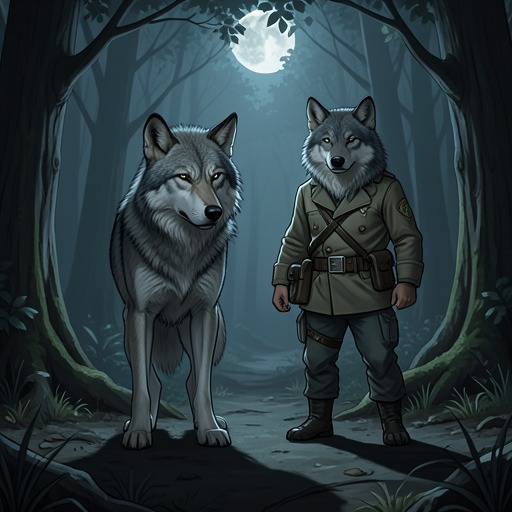
Holding Out for a Hero ▸ Stiles Stilinski (2)Scott McCall is the central werewolf of the narrative and the character through whom its supernatural danger becomes a test of friendship, responsibility, and ordinary adolescent life. His transformation begins after a night in the Beacon Hills Woods, when the consequences of Stiles Stilinski’s eavesdropping lead the boys into danger and Scott is bitten. The bite changes his body, but it does not erase his place within the original trio: Scott, Stiles Stilinski, and Carson Bradley survive the first cycle of werewolves, hunters, forbidden romance, and the elusive Derek Hale with their loyalty intact.
Identity and Introduction
Scott’s supernatural identity is first recognized through physical evidence rather than confession. After the bite, he is stronger, faster, and equipped with heightened senses. Stiles Stilinski’s knowledge of movie monsters and lore helps the group identify the change as lycanthropy, and the friends initially approach the condition as a problem that might be controlled through simple rules: chain Scott up during full moons so that no one gets hurt. That early plan reveals both their fear and their practical instinct. They do not begin with an established supernatural community or reliable instruction; they begin with a changed friend, incomplete knowledge, and the urgent need to keep him from harming anyone.
Scott’s new status also makes him a point of contact between incompatible worlds. He remains a high-school student and a lacrosse player, yet his body now places him inside the hidden conflict involving Derek Hale, the Argent family, werewolves, and the Kanima. The ordinary and supernatural versions of Scott are never fully separated. His athletic ability becomes part of his public identity, while his altered senses and wolf form expose the private danger behind it.
Transformation and Supernatural Conflict
The bite produces a continuing struggle rather than a single completed transformation. Scott and his friends try to learn the rules governing the werewolf condition, but the wider supernatural world is full of threats that cannot be solved by a single restraint method. Derek Hale becomes a recurring and uncertain presence, sometimes a source of knowledge and sometimes a rival whose decisions endanger Scott’s circle. Even the group’s access to guidance remains improvised: Deaton is treated as a trusted veterinary and supernatural guide because he repeatedly helps Scott in moments of crisis, although the boys do not fully understand him.
Scott’s werewolf abilities are shown most dramatically in the confrontation with the giant lizard creature later identified as the Kanima. In full wolf mode, he meets the creature’s snarl with one of his own, turning the encounter into a physical contest between two transformed bodies. The Kanima knocks Scott from a platform, lashes its tail around his ankle, hurls him through the air, and sends him into a large mirror that shatters on impact. Scott’s strength does not make him invulnerable; the scene establishes that supernatural power creates new possibilities while also placing him in more violent and dangerous confrontations.
The Kanima investigation further demonstrates Scott’s position as both fighter and investigator. The group searches for information about the creature through online sources and the bestiary, but finds almost nothing useful about a shape-shifter described as a giant lizard that cannot swim. The absence of reliable knowledge forces Scott and his allies to work through uncertainty, while Derek Hale’s admission that he does not know how to defeat the creature makes clear that even experienced werewolves lack complete control over the crisis. Scott’s survival therefore depends on cooperation rather than superior power alone.
Relationships and Moral Alliances
Scott’s most stable relationship is his long-standing friendship with Stiles Stilinski and Carson Bradley. The three remain together despite the werewolf conflict, hunter activity, romantic complications, and the appearance of Derek Hale. Their bond gives Scott an identity that predates the bite and continues after it. Stiles contributes lore, investigation, and frantic practical reasoning; Carson provides another loyal presence within the group; Scott’s altered condition becomes a shared problem rather than a reason for abandonment.
Scott is also connected to the wider circle through protective and investigative alliances. When he learns that the Kanima is pursuing one particular person rather than people indiscriminately, his expression changes and he identifies the target. That recognition shifts the danger from an abstract monster hunt to a personal rescue effort. Later, when Scott’s mother asks whether something supernatural is going to happen, the question shows that the hidden world is beginning to intrude upon family life as well as friendship.
His relationship with the lacrosse team keeps the supernatural plot tied to the demands of school. Coach Finstock tells Scott that the team needs him but cannot put him on the field the following season unless his grades improve. Scott is therefore judged by an ordinary institutional standard even while he is dealing with violence, transformation, and supernatural emergencies. The conflict between athletic expectations and supernatural responsibility is not merely comic contrast; it shows how Scott must continue performing normal adolescence while carrying a danger that school authorities cannot see.
Crisis, Loss, and Responsibility
Scott’s loyalty becomes most consequential during the crisis surrounding Jackson Whittemore and Lydia Martin. A message tells the group that something is wrong with Jackson and that he may still be alive, while Derek Hale and Peter Hale have a plan that requires Lydia Martin. Scott joins the effort despite the threat posed by the Hales. Stiles Stilinski recognizes the danger in their plan, observing that Derek Hale and Peter Hale might kill Jackson, and Scott is forced to confront a rescue attempt in which the supposed solution may itself be fatal.
The confrontation ends in apparent execution rather than rescue. Derek Hale and Peter Hale attack Jackson from opposite directions, drive their claws through his abdomen, lift him, and drop him after withdrawing their claws. Scott steps forward but realizes that he cannot stop them. Lydia cries out as Jackson coughs, and the group understands that the Hales are not trying to save him. Scott’s power is thus defined by a painful limit: being a werewolf does not mean being able to protect everyone, especially when stronger or more ruthless supernatural figures control the scene.
The aftermath complicates the apparent death. Lydia Martin runs forward and embraces the newly transformed werewolf, and the group watches Lydia with Jackson. Scott’s involvement in this crisis places him between lethal supernatural judgment and the possibility of recovery. He cannot determine the outcome by force, but he remains part of the circle that recognizes Jackson as a person rather than reducing him to the monster he has become.
Change, Continuity, and Narrative Role
Scott’s arc is built on contrast. The boy who was initially expected to be chained during full moons becomes a werewolf capable of confronting the Kanima, yet he remains vulnerable to surprise, injury, incomplete knowledge, school pressure, and the decisions of other supernatural actors. His transformation enlarges his responsibilities without removing the ordinary relationships that make those responsibilities meaningful. The story repeatedly returns him to the same question: how can a changed body remain accountable to the people and life that existed before the change?
The ending places Scott back in summer, after school has ended and the group has an opportunity to reflect on the year. Stiles Stilinski and Scott McCall practice throwing a ball into a lacrosse net while Carson Bradley listens to Scott insist that Allison Argent may return and that he will wait for her. The moment gives Scott a future-oriented form of loyalty, even though Carson regards his hope as both romantic and possibly foolish. It also lets ordinary sports absorb the supernatural aftermath: Scott catches the ball with eyes glowing like embers, visibly still a wolf while participating in a familiar game.
Scott’s final image is therefore neither a return to complete normality nor a surrender to monstrosity. He remains changed, but he is not isolated. Stiles Stilinski and Carson Bradley remind him that he still has them and always will, calling themselves the wolf pack. Scott’s significance lies in that conjunction of power and dependence: the werewolf survives not as a solitary predator but as a friend whose continuing humanity is sustained by a group that refuses to let the supernatural world define him completely.